


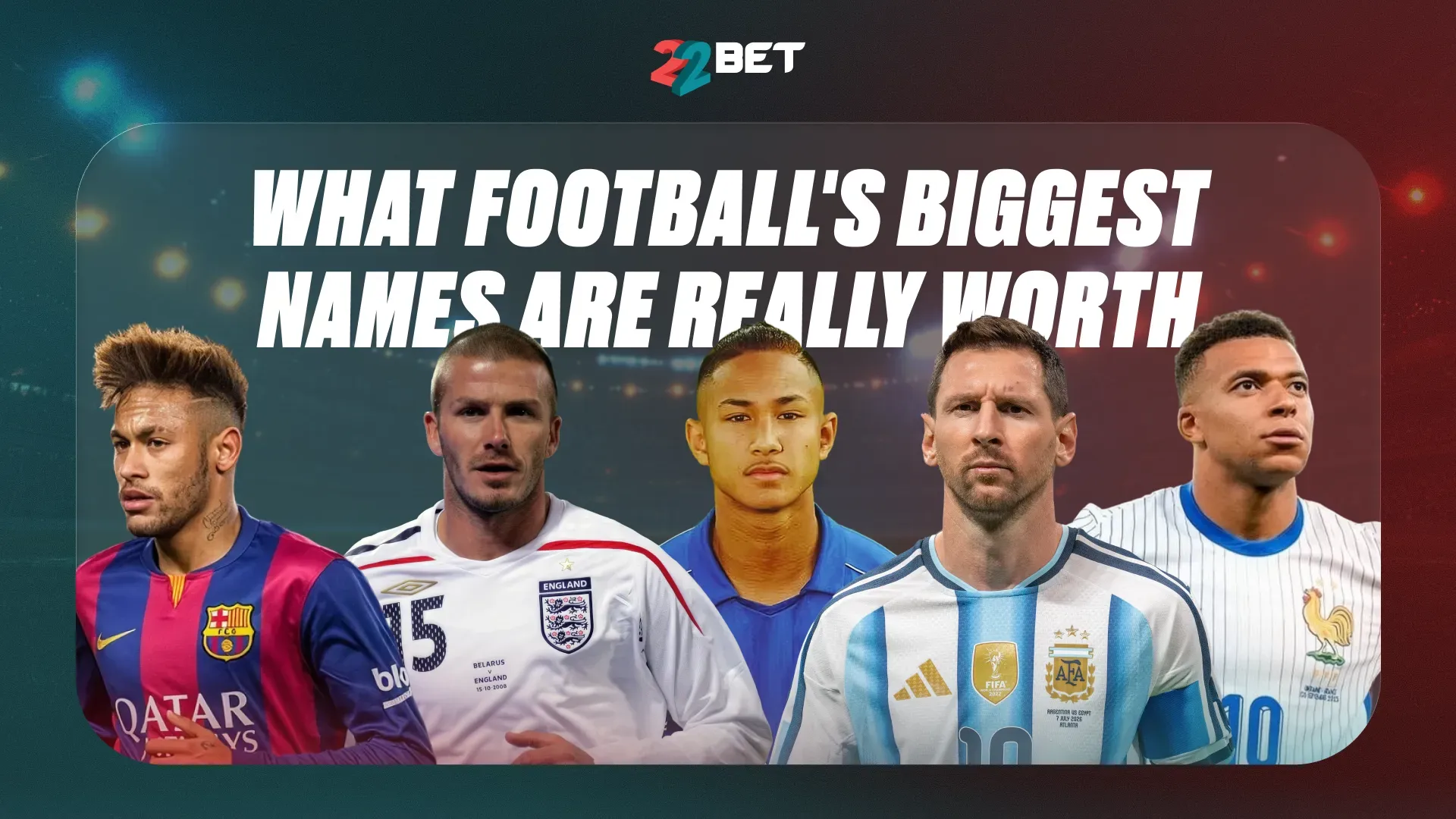
Net Worth Watch: Breaking Down What Football's Biggest Names Are Really Worth
Over the last 50 years, football has evolved from a local business anchored by matchday attendance into a global commercial ecosystem generating tens of billions in revenue annually. Modern players are corporate brands as much as employees. Ronaldo crossed $1bn in personal net worth in 2025, Beckham reached billionaire status in 2026 on the back of a club he part-owns, and Mbappé bought a French second-division side at 25.
This article looks past weekly wages at how those fortunes are actually built, and at how reliably they can be measured.
What Determines a Footballer's Net Worth?
Maximisation of on-field earnings serves as the foundation for broader financial growth. The average footballer’s net worth sits far below these headline figures: most professionals outside the elite tier earn in the low six figures and retire without a fortune. Base salary, secured through FIFA-sanctioned club contracts, provides guaranteed weekly income, while performance bonuses add lucrative rewards for goals, clean sheets, appearances, and team trophies.
Sign-on fees, lump-sum payments, are distributed when joining a club as a free agent. Loyalty payouts further enhance long-term value, rewarding players who complete specified durations at a single club. For example, Kylian Mbappé’s move from PSG to Real Madrid netted him a £128m signing-on bonus.
Another example is Lionel Messi’s contract with Barcelona signed in 2017, which gave the player a reported €115,225,000 as a "renewal fee" for accepting the contract, and an additional €77,929,955 as a loyalty bonus.
Beyond the pitch, a footballer’s net worth is based on commercial power through a variety of channels. Endorsement deals with global brands such as Nike or Adidas provide multi-year partnerships worth tens of millions, while social media platforms allow direct monetisation of follower bases through sponsored posts and brand campaigns.
Many players also establish corporate entities to manage image rights, licensing their likeness for use in video games, trading cards, and international marketing campaigns.
Footballers build structural equity and long-term assets by diversifying beyond salaries and endorsements. Many assemble extensive real estate portfolios, spanning luxury residences, buildings, and hotels, while others channel wealth into private equity, backing tech startups, sports franchises, and high-growth businesses. Intellectual property also plays a key role, with trademarked names, personal clothing lines, and media production companies generating perpetual legacy revenue.
The Richest Footballers in the World Right Now
The richest footballer's net worth is hard to pin down, and the landscape at the top stays competitive. The list combines wealth earned through football and business with inherited fortunes, which is why the top of the table looks unlike any ranking of football earnings. Figures are estimates rather than audited accounts, and different trackers reach different totals for the same player. Where estimates diverge widely, the range is shown.
Top 10 Richest Footballers in the World (as of August 2026)
| Rank | Footballer | Nationality | Estimated Net Worth (GBP/USD) | Wealth Sources |
|---|---|---|---|---|
| 1 | Faiq Bolkiah | Brunei | $20bn | Prospective royal inheritance, not football earnings. Celebrity Net Worth estimates his personal fortune at $50m |
| 2 | Cristiano Ronaldo | Portugal | $1.2bn | CR7 brand empire, endorsements, Al-Nassr contract |
| 3 | Lionel Messi | Argentina | $869m-$1.1bn (estimates vary) | Inter Miami equity, Adidas and Pepsi deals |
| 4 | David Beckham | England | $1bn | Inter Miami ownership, global endorsements |
| 5 | Neymar Jr. | Brazil | $350m | Endorsements (Puma, Red Bull), esports investments |
| 6 | Kylian Mbappé | France | $250m | Real Madrid contract, Nike, Dior, EA Sports |
| 7 | Dave Whelan | England | $210m | JJB Sports fortune, sold Wigan Athletic for £22m in 2018 |
| 8 | Karim Benzema | France | $200m | Saudi contracts, fashion ventures |
| 9 | Zlatan Ibrahimović | Sweden | $190m | Sponsorships (Nike, Volvo), autobiography, Zlatan trademark licensing |
| 10 | Wayne Rooney | England | $170m | Endorsements (Nike, Coca-Cola), managerial career |
How Football Stars Make Their Money
The foundation of a football star’s earnings is the base weekly wage. For example, Manchester City’s Erling Haaland (£525,000), Liverpool’s Virgil van Dijk (£350,000), and Manchester United’s Bruno Fernandes (£300,000) are some of the best-paid players in the EPL as of August 2026. These players also rank among the best for their respective clubs.
Erling Haaland finished the 2025/26 season for Manchester City with 38 goals and 9 assists (all competitions) in 52 total appearances, securing his third Premier League Golden Boot with 27 goals in 35 league matches.
Bruno Fernandes broke the Premier League single-season assist record with 21 assists alongside 8 league goals in 38 PL appearances. These figures show how top performances track with top wages.
Competitive performance on the pitch then translates into commercial opportunities that drive total growth for a footballer’s net worth. Lionel Messi and Cristiano Ronaldo have eight and five Ballon d’Ors, respectively, which are markers of their performances in club and international football. These are connected to their successes and resulting net worth valuations for Messi and Ronaldo.
Salary vs Endorsements: Which Generates More Wealth?
The highest-paid footballer net worth figures rest on a balance of salary and off-pitch income. On-pitch earnings provide steady, liquid capital. Corporate sponsorship structures drive exponential long-term growth.
For instance, Kylian Mbappé earns an on-field package of between $70 million and $86 million. This combines his Real Madrid salary, signing bonus, image rights, and endorsements. On top of this salary, the forward has an endorsement portfolio estimated at $25-30 million. It’s anchored by one of Nike’s largest individual athlete contracts alongside deals with Hublot, Oakley, Dior, EA Sports, and fantasy-sports platform Sorare.
Global apparel giants dominate spending. Long-term alignment with Adidas, Nike, and Puma forms a financial baseline. As of 15 May 2026, ten of the brand’s leading football signings include Lionel Messi (earns around £21 million from his lifetime deal with Adidas), Lamine Yamal, Jude Bellingham, Mohamed Salah, Declan Rice, Son Heung-min, Pedri, Raphinha, Rodrygo, and Scott McTominay.
Strategic partnerships with digital entertainment entities such as EA Sports and fantasy-sports platforms like Sorare provide lucrative, recurring cash flows. Superstars also leverage their fame to secure equity valuations, dividends, and royalties, moving away from simple cash-for-ad deals into entrepreneurship.
Business Ventures, Investments, and Ownership Stakes
Successful footballers increasingly transition from employees to asset owners, deploying capital into stable global industries. Cristiano Ronaldo's net worth includes a diversified empire through his CR7 brand, spanning hotels in Madrid and Lisbon, gyms, and a fashion line. The CR7 portfolio is reported at over $100m, separate from his $1.2 billion total net worth.
Lionel Messi has invested heavily in real estate, owning luxury properties across Barcelona, Miami, and Ibiza, while lending his name to Messi Experience attractions. These include a long-delayed Nanjing project and a Dubai venue. These assets sit inside a total net worth estimated between $869m-$1.1 billion.
Hospitality partnerships are another lucrative avenue. David Beckham co-owns Inter Miami CF, a franchise valued at more than $1.35 billion. He also holds a long-standing Adidas relationship dating to 1996, though he ended his nine-year Haig Club partnership in 2023 to pursue his own drinks venture.
Neymar Jr. has channelled wealth into esports, launching NR Sports and investing in gaming startups, alongside luxury property holdings in Brazil and Paris.
Digital finance assets have also attracted modern players. Paul Pogba and Andrés Iniesta have invested in blockchain and cryptocurrency ventures. Gerard Piqué co-founded Kosmos Holding, a sports and media investment group, which secured rights to the Davis Cup (which ended in 2023 after just five years into a 25-year deal).
Intellectual property licensing further generates royalties: Zlatan Ibrahimović trademarked his own name early in his career, and licensing that mark has outlasted his A-Z Sportswear line, which Varner Group closed in 2018 after £18m of losses. Mesut Özil launched his own eSports team (M10 eSports) and clothing brand (M10 Streetwear).
Footballers Who Became Billionaires (or Are Close to It)
| Footballer | Primary Brand Engine | Key Equity Holdings | Billionaire Status |
|---|---|---|---|
| Cristiano Ronaldo | CR7 Brand & Al-Nassr | 15% Club Equity, Pestana Hotels | Confirmed billionaire |
| Lionel Messi | Inter Miami & Adidas | MLS Revenue Share, MiM Hotels | Confirmed billionaire (May 2026) |
| David Beckham | DB Ventures | Inter Miami Co-ownership | Confirmed billionaire (May 2026) |
| Neymar Jr | NR Sports | Real Estate, Esports Franchises | High millionaire |
Rising Stars with the Fastest-Growing Net Worths
Kylian Mbappé
Kylian Mbappé’s net worth has surged past $250 million, accelerated by his 2024 move to Real Madrid. His salary at Real Madrid is worth around $32.7 million per year.
Off the pitch, Mbappé commands premium sponsorship revenue, earning more than $25 million annually from Nike, Dior, and EA Sports. At just 27, he already owns 80 per cent of Ligue 2 side SM Caen, acquired in 2024 for a reported €15m to €20m through his Coalition Capital vehicle.
Erling Haaland
Three golden boots in the EPL build a player’s profile and brand value. Erling Haaland's net worth reflects his dominance as a modern goalscorer. His Manchester City contract makes him the highest-paid player in the Premier League, with a basic salary exceeding $712 000 per week.
His portfolio is expanding rapidly, with endorsements from Nike, Samsung, and Hyperice generating an additional $20 million per year. Combined, Haaland’s net worth is estimated at $80 million, and his brand value continues to grow alongside his record-breaking goal tally.
Jude Bellingham
A move from Borussia Dortmund to Real Madrid accompanies a growth in earnings and net worth. Jude Bellingham has quickly become one of football’s most marketable assets. His 2023 transfer to Real Madrid, valued at €103 million, elevated his global profile and boosted his net worth to approximately $50 million. He serves as a primary ambassador for Adidas and luxury fashion houses, with endorsements (the figure is not publicly available).
How Net Worth Estimates Are Calculated
Footballers’ net worth estimates are built from a blend of visible contract data and commercial filings. Transfermarkt and Forbes are the two most widely cited starting points, the former for contract and transfer data, the latter for endorsement estimates. Publicly disclosed salaries form the baseline: Cristiano Ronaldo’s Al Nassr contract pays around $235 million annually.
Messi’s disclosed MLS figures show a $12 million base salary and $20.4m in guaranteed compensation. But Inter Miami co-owner Jorge Mas put his actual annual take at $70m to $80m once equity and revenue shares are counted. The gap between the two numbers shows why disclosed salary alone is a poor guide to a player’s wealth.
Analysts then layer in endorsements; for instance, Ronaldo earns more than $200 million from Nike, CR7 fashion, and Saudi partnerships. Kylian Mbappé’s Nike, Dior, and EA Sports deals generate roughly $25 million annually.
Private assets add complexity. David Beckham’s Inter Miami ownership stake has helped build his net worth, estimated at $1 billion. Real estate valuations also fluctuate: Messi’s property portfolio is worth tens of millions but moves with the market. Tax optimisation frameworks further alter net capital returns, with players using entities to reduce liabilities.
Because of these variables, most reputable trackers present ranges rather than fixed figures. For example, Messi’s net worth is estimated between $869m-$1.1bn, while Ronaldo’s sits at about $1.2bn.
Biggest Factors That Increase or Reduce a Player's Wealth
Asset growth in football requires continuous capital deployment, and career longevity directly extends high-earning cycles.
Cristiano Ronaldo, for instance, has sustained elite earnings for nearly two decades, with his net worth surpassing $1.2 billion thanks to long contracts and diversified ventures.
Entering emerging sports markets also secures compensation; Karim Benzema’s move to Saudi Arabia was worth around $108 million a year at Al-Ittihad, and his February 2026 switch to Al Hilal raised that figure again.
Diversified portfolios protect against inflation: Messi’s Inter Miami equity sits inside a franchise Forbes values above $1.35bn, an asset class that holds value differently from cash.
On the other hand, spending choices compress personal wealth.
Maintaining luxury yachts, such as Cristiano Ronaldo’s $7 million Azimut Grande yacht, requires capital. Premium assets like Paul Pogba’s multimillion-dollar watch collection or Neymar’s sports memorabilia investments lock up liquid reserves.
Complex tax litigation has also impacted stars; Lionel Messi and Neymar both faced multimillion-dollar tax disputes in Spain, temporarily reducing accumulated cash. Poorly managed business projects present risks too, as seen with Ronaldinho’s failed ventures in Brazil, which led to financial strain despite his past earnings.
High-visibility lifestyle choices demand structured wealth management. Zlatan Ibrahimović, for instance, balances his luxury spending with licensing income from his trademarked name.
Many players also dedicate resources to philanthropy.
Marcus Rashford’s campaigns against child hunger in the UK and Didier Drogba’s foundation in Ivory Coast show how wealth is channelled into social impact.
Retired Legends Who Continue to Build Their Fortunes
David Beckham
A fortune spanning an MLS franchise, global endorsements and equity sales shows how a playing career can become the foundation of lasting wealth. David Beckham’s net worth, estimated at $1bn, illustrates the power of post-career asset management.
Since retiring in 2013, his brand value has grown through strategic ownership of Inter Miami CF, now valued at more than $1.35 billion. His global licensing deals and media ventures continue to generate steady cash flows.
Zlatan Ibrahimović
A unique personal brand is Zlatan Ibrahimović’s key driver of value, with a net worth of around $190m. He secured the formal trademark for his name early in his career, guaranteeing ongoing licensing returns. His portfolio includes sponsorships with Nike, Volvo, and other wellness ventures.
Ronaldo Nazário
Ronaldo Nazário’s wealth, estimated at $160 million, reflects his ambitious corporate agenda. His lifetime Nike footwear contract secures long-term financial stability, while his 2025 sale of a majority stake in Real Valladolid, bought for around €30m in 2018, returned capital to his portfolio. He also runs a football academy (The R9 Ronaldo Academy) with chapters in Brazil, China, and the United States.
What the Future Looks Like for Football's Wealthiest Players
The landscape of football finance continues to expand. Emerging global leagues, such as the Saudi Pro League, alter historical wage patterns (with deals like Cristiano Ronaldo’s roughly $235 million a year at Al-Nassr ).
Modern athletes demand direct equity over simple salary structures, as highlighted by Lionel Messi and David Beckham’s ownership stakes in the Inter Miami franchise when they each moved to the MLS.
Media digitisation opens fresh distribution channels. Personal platforms bypass traditional broadcasting networks, such as Cristiano Ronaldo’s Instagram reach being a multi-million-dollar revenue stream.
The pattern points one way. A player entering his peak years now negotiates for a share of the asset rather than a wage against it, and the wealth that follows is measured in club valuations rather than weekly pay. Whether those valuations hold is the open question.