

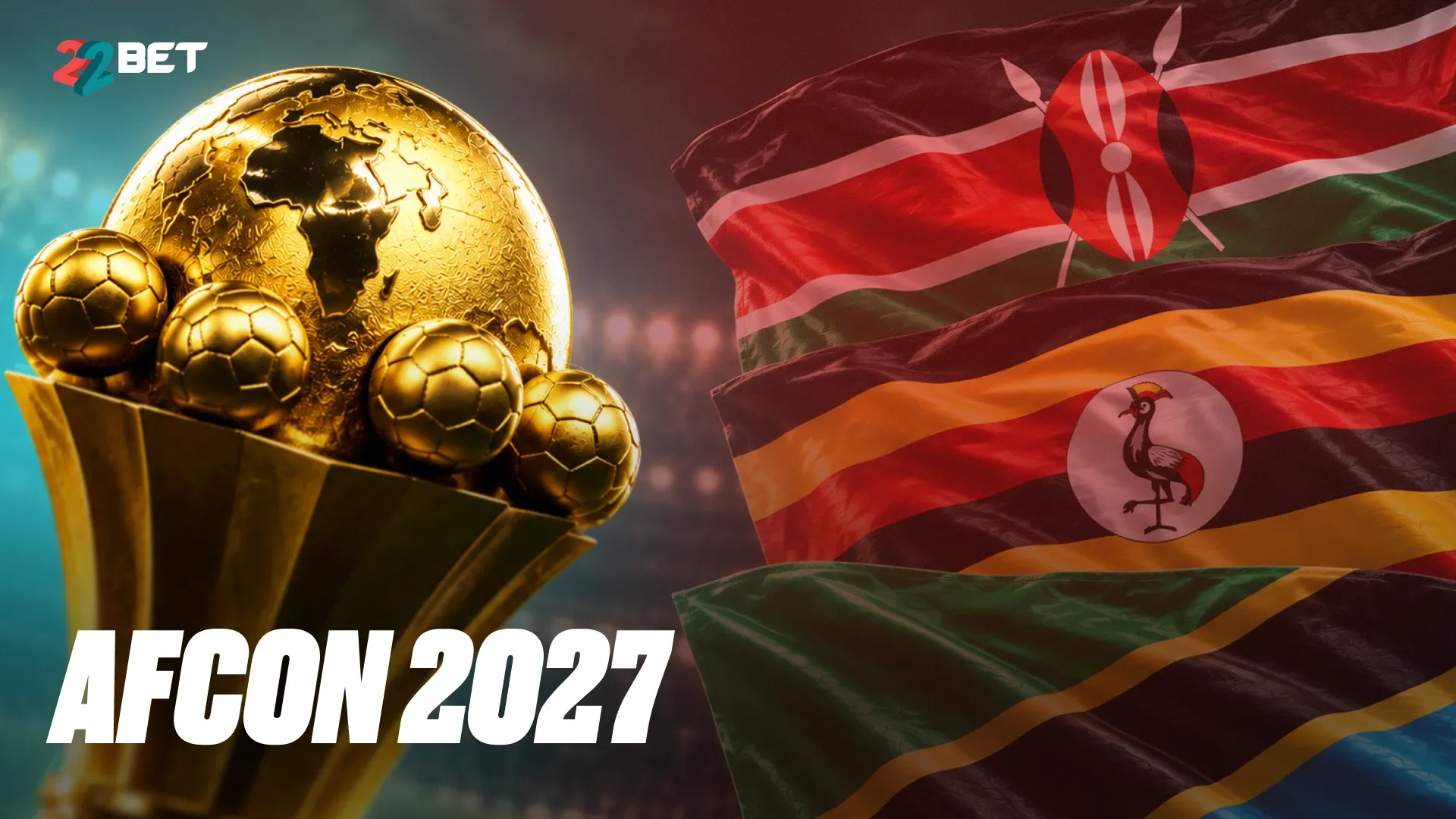
Kenya, Uganda and Tanzania in AFCON 2027 qualifying: What the hosts need to prove
Kenya, Uganda and Tanzania already hold three of the 24 places at the 2027 Africa Cup of Nations (AFCON), which runs from 19 June to 17 July 2027. They are currently playing the qualifiers, and the first results show how much work remains before the opening match. Early AFCON news is mixed: Uganda top Group H after beating Libya, while Kenya and Tanzania are still waiting for a first win.
AFCON 2027 Qualifying: What Kenya, Uganda and Tanzania Face
The Confederation of African Football (CAF) split 48 teams, including the three co-hosts, into 12 AFCON groups of four. In the nine groups without a host, the top two qualify. The 2027 AFCON qualification draw took place in Cairo on 19 May 2026.
The process for the AFCON 2027 host country qualification works differently from the standard rule. In the three groups containing a host, only the highest-placed of the other three teams joins the finals, wherever the host finishes. That arithmetic gives nine groups with two places and three groups with one, so 21 places go to qualifiers and three to hosts.
CAF's fixture list, published on 4 September 2026, confirmed that all three hosts would play their six qualifying matches. There are no playoffs after the group phase: the final table decides every place.
The qualifiers are spread over three FIFA windows: 21 September to 6 October 2026, 9 to 17 November 2026, and 22 to 30 March 2027. The first window closes on 6 October.
Why the East African Hosts Still Have Something to Prove
Kenya failed to qualify for the 2025 tournament in Morocco. Uganda did reach it, then finished bottom of their group with one point after losing 3-1 to both Tunisia and Nigeria. Tanzania were the exception, reaching the round of 16 for the first time with two points.
In the FIFA rankings, as of 2 October 2026, Uganda were 87th, Kenya 115th and Tanzania 116th. Kenya have not held a top-100 place consistently since 2018.
In February 2026, CAF president Patrice Motsepe dismissed reports that the tournament would move to 2028, and Football Kenya Federation (FKF) president Hussein Mohammed said Kenya were ready. The tournament will be the first in the Council for East and Central Africa Football Associations (CECAFA) region since Ethiopia hosted in 1976.
Pressure has grown since. On 17 and 18 September 2026, Motsepe inspected venues in Tanzania and Kenya, admitted some preparations were behind schedule and insisted there was "no Plan B". For Kenya hosting AFCON at Talanta and Kasarani, the deadline that matters is his final inspection in January 2027.
Kenya's AFCON 2027 Qualification Challenge
Kenya sit in Group D with South Africa, Syli National (Guinea) and Eritrea. Head coach Benni McCarthy opened with a 1-1 home draw against Eritrea at Nyayo National Stadium on 26 September.
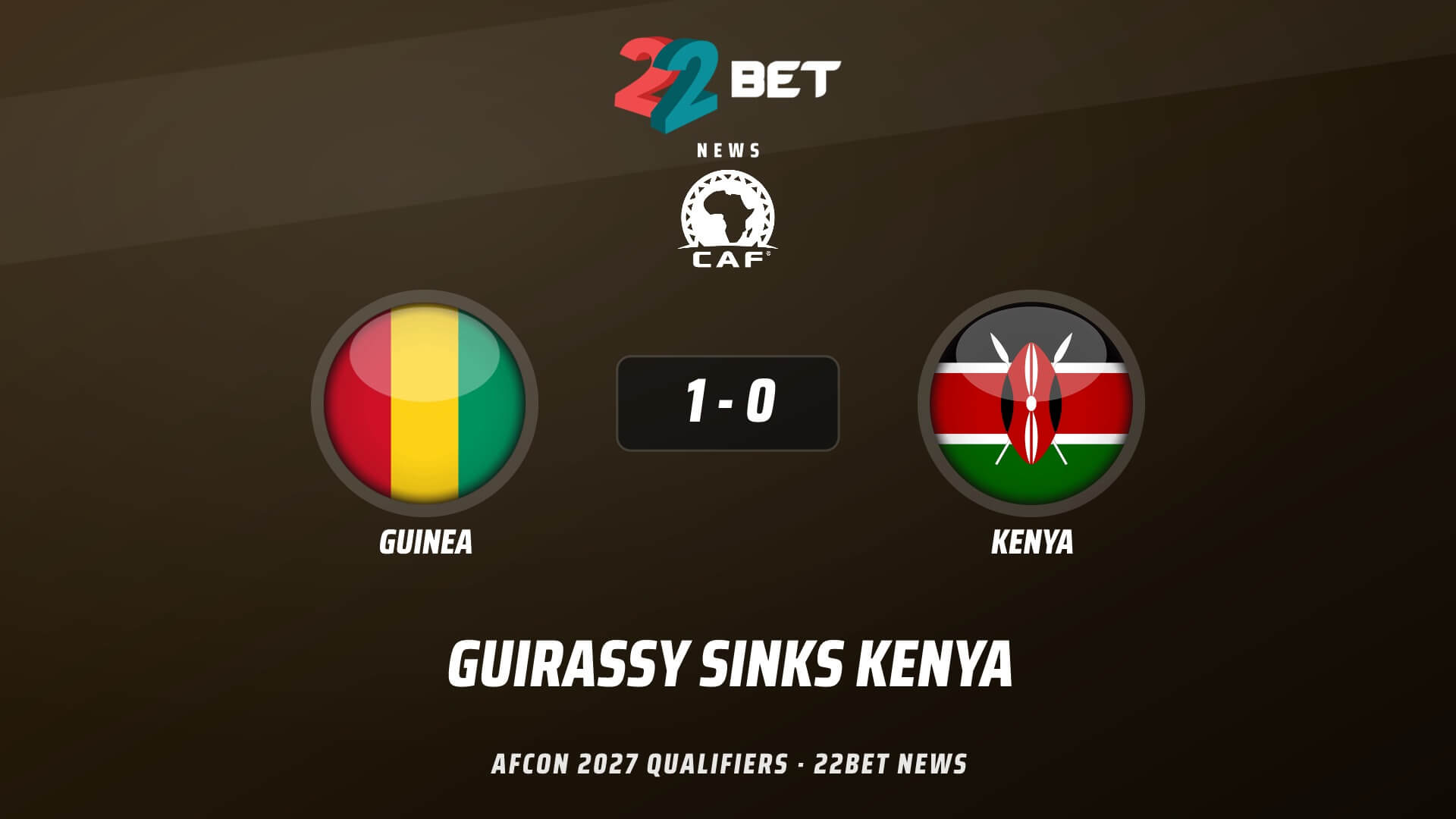
Eritrea led from the 37th minute, and Ryan Ogam equalised in the 87th. Kenya have not beaten Eritrea since 2003. Five days later, Guinea won 1-0 in Conakry, with Serhou Guirassy scoring in the 32nd minute of the Syli National's first home game since June 2022.
Players were in dispute with the federation over unpaid allowances before the Eritrea match, which led to a go-slow and, by McCarthy's account, no proper training. Captain Michael Olunga was held back as a fitness precaution after a long injury lay-off.
Kenya's AFCON fixtures run as follows:
- 26 September: Kenya 1-1 Eritrea at Nyayo National Stadium.
- 1 October: Guinea 1-0 Kenya at Stade du 28 Septembre in Conakry.
- November window: Two games against South Africa, away then home.
- March 2027: Eritrea away, then Guinea at home.
Uganda's AFCON 2027 Qualification Challenge
Arnold Vula, handed his debut by head coach Paul Put, headed the winner from Allan Okello's free kick in first-half stoppage time as Uganda beat Libya 1-0 at the new Hoima City Stadium on 29 September. Denis Onyango saved Libya's best early chance. The match was the first competitive Uganda international outside the Kampala area apart from CECAFA tournaments.
Before that, Uganda drew 1-1 with Tunisia in Radès. Group H puts Put's Cranes (Uganda) with Tunisia (the 2004 African champions), Libya and Botswana. Four points leave Uganda top of the group, and Botswana are their next opponents in November.
Uganda's AFCON squad is still being shaped. Naturalised players have intensified competition for starting places, and the Cranes have scored only twice in two games.
Tanzania's AFCON 2027 Qualification Challenge
Tanzania's AFCON results so far are a 2-0 home defeat and a 1-1 draw. Against Guinea-Bissau at the New Amaan Complex on 25 September, Tanzania had 60.1 per cent of possession and 20 shots, but lost. Four days later, they led Madagascar in Meknès, Morocco, where Madagascar staged their home match, before Nicolas Fontaine equalised in the 51st minute.
Tanzania's AFCON group is Group L, with Nigeria, Madagascar and Guinea-Bissau. Argentine coach Miguel Gamondi has asked for better finishing and says he treats the games as serious tests. Tanzania face Nigeria on 11 November.
Tanzania qualified for the 2025 finals by finishing second in their group. In Morocco, draws with Uganda and Tunisia, both 1-1, took them through as one of the four best third-placed teams, before a 1-0 defeat by the hosts in the round of 16.
AFCON 2027 Qualifying Groups and Key Opponents
The table for each AFCON host group stood as follows after two matchdays.
| Group | Standings (Points, Goal Difference) |
|---|---|
| D (Kenya) | South Africa 6 (+6), Guinea 3 (0), Kenya 1 (-1), Eritrea 1 (-5) |
| H (Uganda) | Uganda 4 (+1), Tunisia 2 (0), Botswana 2 (0), Libya 1 (-1) |
| L (Tanzania) | Guinea-Bissau 6 (+5), Nigeria 3 (-2), Madagascar 1 (-1), Tanzania 1 (-2) |
In the table, South Africa lead Group D with a 2-1 win over Guinea and a 5-0 win over Eritrea. In Group H, the opponents are Tunisia, who have drawn both games, and Libya and Botswana, who drew 2-2 on matchday one.
Group L is the least predictable. Guinea-Bissau beat Tanzania 2-0 and then Nigeria 3-0, while Nigeria had beaten Madagascar 2-1. Nigeria have little margin for error after being drawn alongside a host.
How the Host Nations Can Strengthen Their Squads
Benni McCarthy has the widest overseas pool of the three managers. Uganda's Paul Put is fitting naturalised arrivals around veterans like 41-year-old captain Denis Onyango. Tanzania's Miguel Gamondi needs a reliable scorer more than anything else.
The Role of Diaspora Players
McCarthy's Kenya squad for the first two games included English-based Vincent Harper (Exeter City) and Micah Obiero (Carlisle United). Forward Ryan Ogam (Belgium-based) and Timothy Ouma (Charlton Athletic) were also called up. Ogam's late goal against Eritrea shows what that pool can contribute.
A June 2026 newspaper column urged the federation to speed up passport and documentation work for eligible diaspora players, naming Everton-trained midfielder Tyler Onyango. McCarthy and federation vice-president McDonald Mariga had met Onyango, Wrexham defender Zak Vyner and other heritage prospects in England in March 2026.
Uganda's route combines heritage and naturalised players, with Nathan Asiimwe and Noble Okello included through their Ugandan parentage, while the naturalised group features additions such as Arnold Vula, Kevin Owusu Boateng, Abdoulaye Sissako and Souleyman Diaby. The Cranes' coaches must now fit those arrivals into a team that have only just found a winning pattern.
Developing Local Talent
Of the 24 players named for the matches against Eritrea and Guinea, nine play for Kenyan clubs, including goalkeepers and defenders from Gor Mahia, Nairobi United and Tusker. Two of the brightest prospects are Aldrine Kibet at Celta de Vigo and Amos Wanjala at Valencia's reserve side, Mestalla. Both came through the Talanta Hela youth development programme before joining Spanish club academies. Wanjala has also made the senior squad for these qualifiers.
The Kenya Academy of Sports was among the six Kenyan venues CAF's pitch expert inspected in February 2026. In Tanzania, Azam FC's Academy in Chamazi has produced senior Taifa Stars (Tanzania) players like goalkeeper Aishi Manula.
Key Matches that Could Define the Qualification Campaign
The November window carries most of the weight. These are the games to watch:
- Nigeria vs Tanzania, 11 November: Tanzania's first qualifying meeting with the group's biggest name, on the same day Madagascar play Guinea-Bissau.
- Uganda vs Botswana, November: A chance for the Cranes to build on four points.
- Libya vs Tunisia, November: The game most likely to shape who takes the one open place in Group H.
- South Africa vs Kenya and Kenya vs South Africa, November: A back-to-back pair of matches, away first and then in Nairobi, that tests whether Kenya can take points off the group leaders.
The East African derbies cannot happen in qualifying, because Kenya, Uganda and Tanzania sit in different groups. The Kenya vs Uganda fixture dates back to 1 May 1926, when Kenya drew 1-1 with Uganda in Nairobi.
Home Advantage and East African Conditions
Nairobi's climate is shaped by altitude: the city sits at about 1,795 metres, and the finals take place in the June to September dry season, the coolest part of the year. Kenya's home game against South Africa in November falls in the short rains. Dar es Salaam is a coastal city where the first leg of the 2023 CAF Confederation Cup final was played at 26 °C and 87 per cent humidity.
Kenya's AFCON stadiums are the 60,000-seat Talanta Sports Stadium and Kasarani. Tanzania are preparing the Benjamin Mkapa Stadium, the new Samia Suluhu Hassan Stadium in Arusha and projects in Zanzibar. Uganda have Mandela National Stadium, Hoima City Stadium and Akii-Bua Stadium in Lira. Hoima City Stadium seats 20,000.
Home supporters filled Hoima City Stadium for the Libya game. Travel counts against the hosts too: Kenya played in Conakry five days after their home game, and Tanzania had to fly to Meknès in Morocco, where Madagascar staged their home match.
What AFCON 2027 Qualification Means for East African Football
Qualifying is not the hosts' goal, since all three are already in, but a strong campaign sets up the finals. CAF says the competition can reach over 400 million people in the region. The tournament is also the last odd-year edition, since CAF announced in December 2025 that AFCON will become a four-yearly event from 2028.
Tanzania's prime minister, Mwigulu Nchemba, said the aim goes beyond a world-class tournament to a lasting legacy for sport, and FKF president Hussein Mohammed said the pitch assessments will benefit local league matches after the competition.
Can Kenya, Uganda and Tanzania Challenge Africa's Strongest Teams?
Uganda's 1-1 draw in Radès, their first point against Tunisia, is the most impressive AFCON result by a host so far. Tanzania's home defeat and Kenya's draw with Eritrea and defeat in Conakry show the gap that remains.
Morocco reached the 2025 final on home soil and rose to eighth in the January 2026 FIFA ranking, their best position ever. That is the benchmark home advantage can set, and none of the three East African hosts have come close to it.
Early AFCON predictions make South Africa favourites for Group D's one non-host place, and Guinea-Bissau the team to beat in Group L. Group H is the most open of the three, with only three points separating Uganda at the top from Libya at the bottom.