


%20and%20How%20to%20avoid%20betting%20addiction_%205%20warning%20signs.jpg)
Letting your emotions control your betting destroys your bankroll. Many bettors start with a plan, then overbet after two or three losses. Stakes increase. Accumulators get bigger. The goal changes from smart decisions to “getting it back.” That shift is called tilt. Understanding what tilt control is, and recognising the signs of a gambling problem, are the difference between controlled betting and long-term financial damage. This guide explains how to stop sports betting spirals before they grow — and how to spot when overbetting becomes a deeper addiction issue.
What is a Tilt?
In betting, tilt describes the emotional fallout from losses that lead to poor decision-making. Though the term comes from poker, it is equally relevant in sports betting, stock trading, and other online wagering markets. A bettor loses three football games on Saturday, then doubles the stake on a late match to recover. That decision is emotional, not analytical. Tilt can be observed through several behaviours. One common reaction is increasing stake size after losses, referred to as overbetting, where a bettor raises their wager in an attempt to recover quickly. Another sign is entering markets without proper research, driven more by emotion than analysis. Tilt also shows up in impulsive chasing of live bets, where decisions are made in the heat of the moment rather than with strategy. Finally, it involves ignoring bankroll limits, abandoning the discipline that protects long-term stability. Tilt tends to fade with discipline; addiction persists despite consequences. Recognising the difference is essential for proper control.
How to Avoid Overbetting After Losses (Tilt Control Techniques)
Only when a bettor institutes proper structure before losses can they say that they have effectively achieved tilt control. The rules must exist before the losses happen.
1. Pre-Set Stake Limits You Never Break
One of the most effective safeguards against tilt is defining a fixed percentage for every wager - typically between 1% and 3% of your total bankroll. For example, if your bankroll is $1,000, your maximum stake should be $30. Raising that amount to $100 after a loss is not discipline; it’s overbetting. Professional bettors avoid this trap by judging risk in units rather than emotions tied to individual games. By sticking to consistent stake sizing, they prevent panic escalation and protect long‑term stability.
2. The Mandatory Pause Rule
Discipline is knowing how to pause when losses pile up. A common guideline used by experienced bettors is to stop after three consecutive losses. After this, one should close the app, step away from the market, and take a full 24‑hour break. This pause interrupts the emotional momentum that fuels reckless wagers. Impulse betting thrives on immediacy. For example, chasing a live wager right after a loss feels urgent but rarely ends well. By deliberately creating distance, you restore clarity and regain control over your decisions.
3. Separate Analysis From Emotion
Imagine a bettor who has carefully researched a football match, found value at odds of 2.10, and placed a stake with confidence. The team plays well but concedes a last‑minute goal, resulting in a loss. The instinctive reaction is frustration - “my analysis must have been wrong.” In reality, that outcome reflects variance, not flawed reasoning. The key is to separate emotion from evaluation, improving your chance to beat the overbetting trap. Instead of reacting impulsively, review the fundamentals:
- Was the price fair?
- Did the market move in your favour?
- Was the decision supported by solid data?
By judging the logic behind your choices rather than the outcome itself, you avoid the trap of thinking losses are a personal failure. Emotional interpretation is what creates tilt; disciplined analysis keeps you grounded.
4. Reduce Volume, Not Control
A bettor placing ten weekend bets under emotional pressure is not disciplined - they are scattered. The smartest adjustment is to reduce the number of bets without sacrificing discipline. Instead of placing ten wagers across a weekend, narrow your focus to just three. Fewer decisions ease emotional pressure, leave any emotions out of the decision, and make it easier to stay objective. Overbetting multiplies stress, while selectivity strengthens control and keeps your bankroll strategy intact.
5. Judge Decisions, Not Results
A sound decision doesn’t lose its validity just because the result went against you. For instance, if a team priced at 2.20 had strong statistical backing but still lost 1‑0 due to a red card, the process behind the wager was still correct. Tilt arises when losses are misinterpreted as personal failure rather than random variance. Long‑term success comes from maintaining focus on the underlying edge, not on short‑term swings that are inevitable in probability‑based markets.
The Difference Between Tilt and Betting Addiction
Based on the signs and symptoms shown among addicts, clinicians have categorised gambling addiction as a behavioural disorder. Gambling disorders involve persistent, problematic gambling tendencies that disrupt personal, financial, and social life. This reveals a distinction between a tilt and addiction: 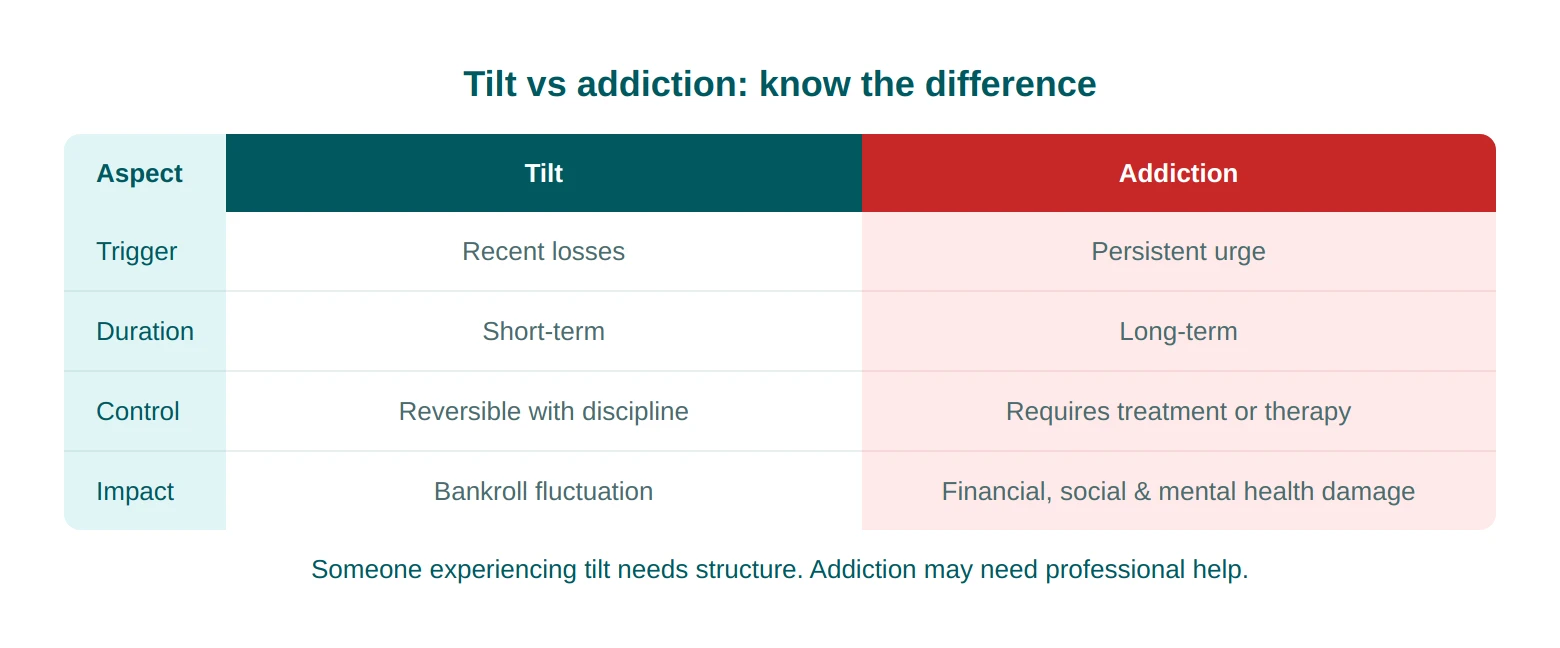
How Overbetting Can Turn Into Gambling Addiction
Overbetting often starts as emotional chasing. Repetition turns it into a pattern, and the warning signs arrive before the bettor notices. 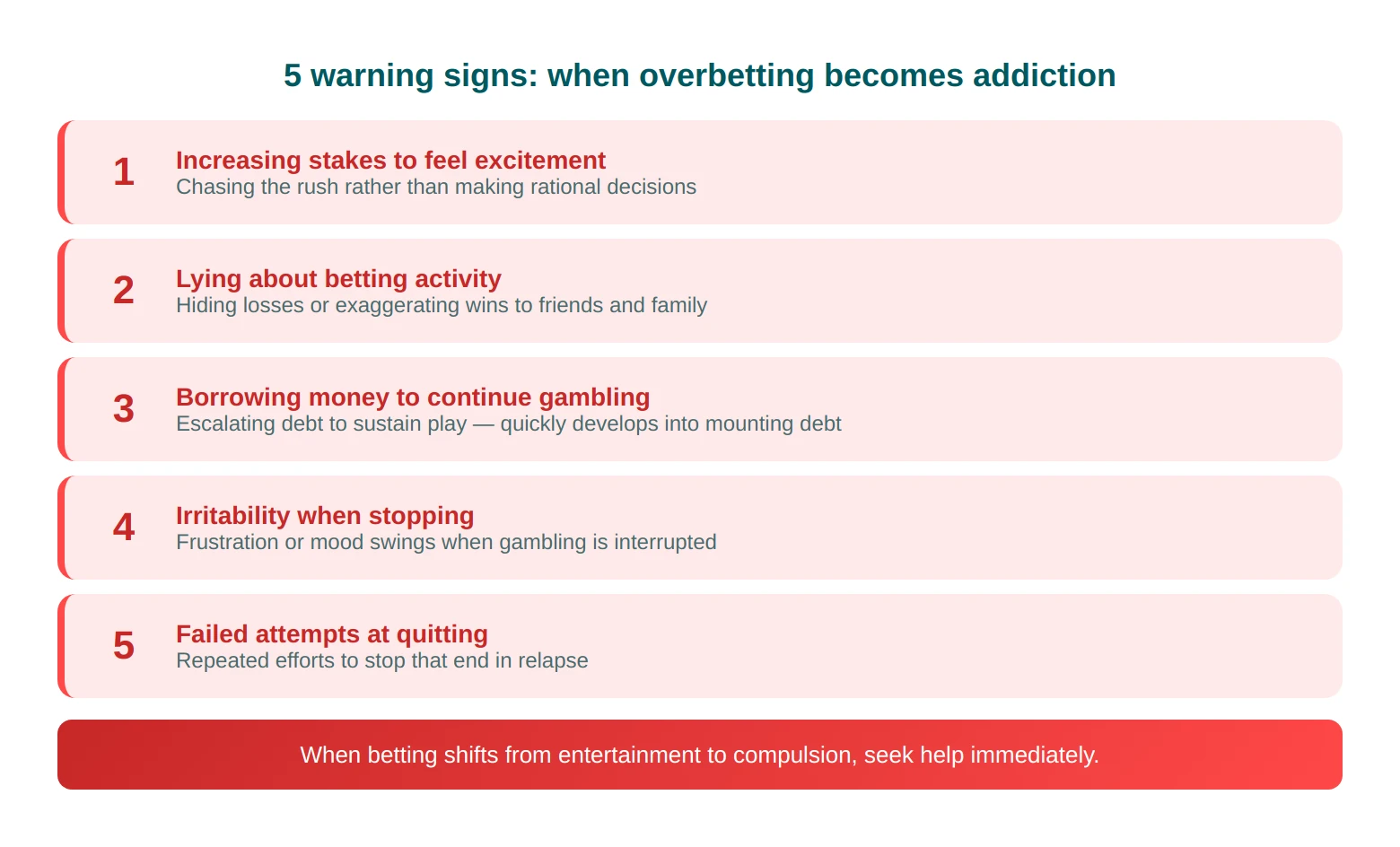 When betting shifts from entertainment to compulsion, addiction develops. Gambling addiction affects your relationships, work, and mental health. This addictive behavioural process is similar to substance dependency.
Healthy Betting Habits That Prevent Addiction
Prevention is stronger than recovery. The first step is structured bankroll management. Bettors should never deposit money they cannot afford to lose, and betting funds must remain separate from essential expenses such as rent, savings, or investment capital. Discipline also requires scheduled betting windows. Setting specific days or hours for wagering helps avoid spontaneous, boredom-driven activity that leads to overbetting. Equally important are emotional check-ins. Before placing a bet, ask yourself whether you are chasing losses, feeling stressed, or using betting as a way to escape something. Dealing with these underlying emotions is pivotal because gambling should never function as emotional therapy. Another safeguard is limiting exposure. Removing betting apps from your home screen, disabling push notifications, and reducing triggers can lower impulsive behaviour. Finally, find support early. If you struggle to stop your gambling addiction patterns on your own, access help immediately. Organisations such as Gamblers Anonymous provide group support, while in many countries across the globe, mental health clinics and rehabilitation centres offer structured treatment programs. Confidential helpline services also exist to offer advice and immediate assistance. If a person feels addicted, reaching out early can improve recovery outcomes and help overcome compulsive urges.
A Simple Self-Check Before Every Bet
Use this quick checklist before confirming any wager: 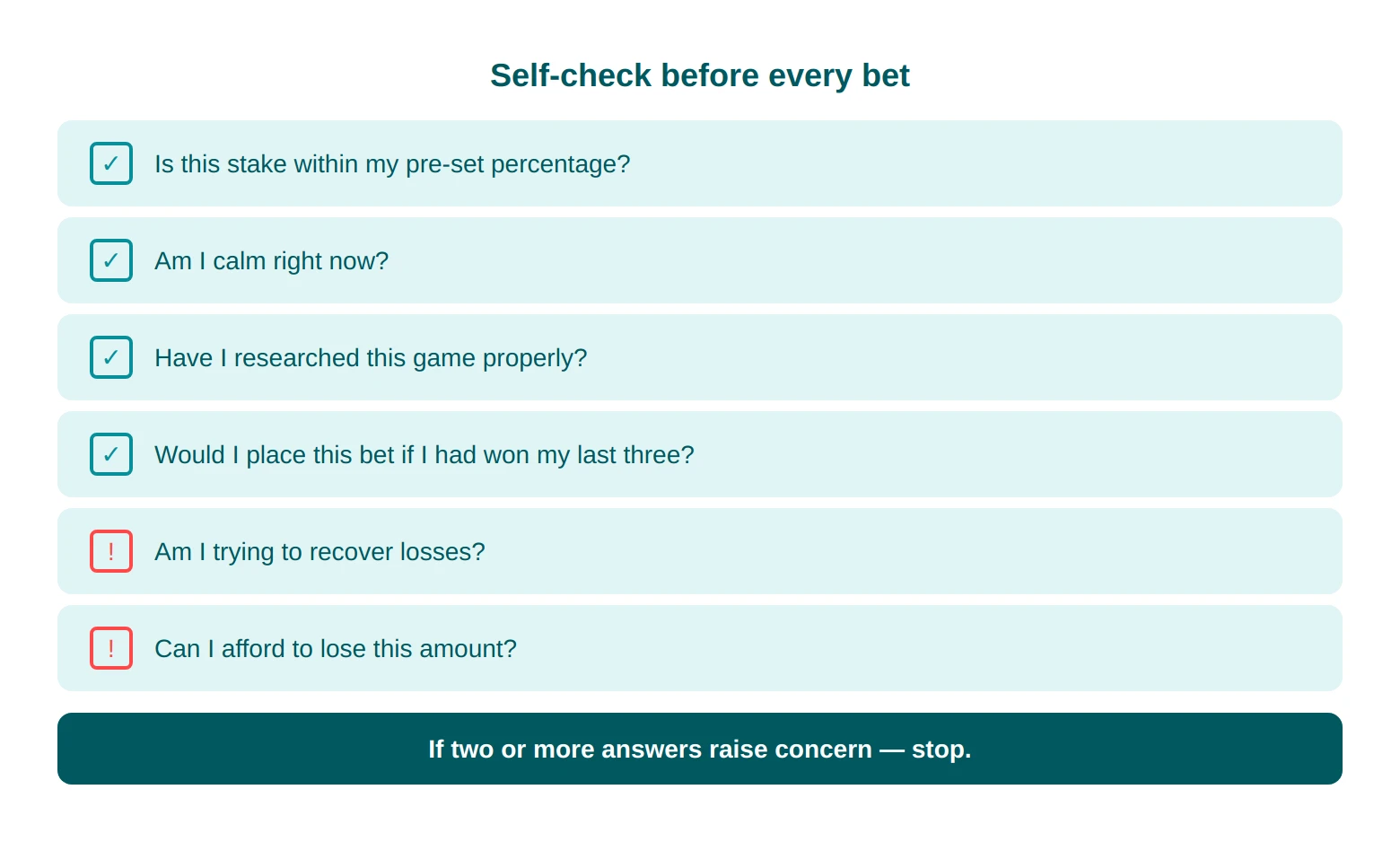 Self-awareness prevents escalation. These are practical tips to stop gambling irresponsibly.
(https://22bet.com/information/rules/20) section on 22Bet.