


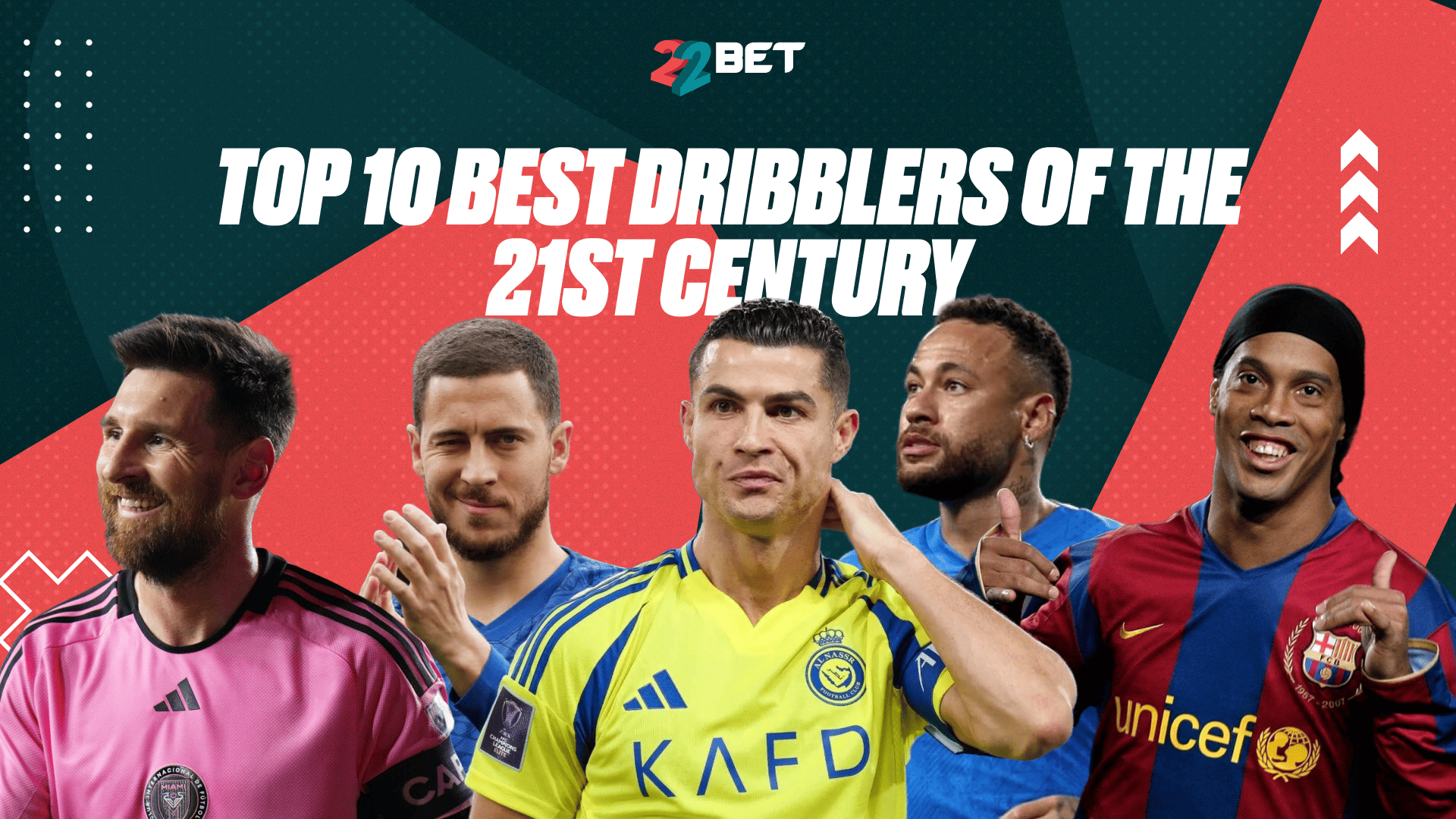
Football has seen many superb dribblers throughout history. From Garrincha to Diego Maradona, we have been blessed to witness players who've changed the sport. In the 21st century, we have seen some of the best dribblers of all time. Check out our top 10 players.
How We Ranked the Best Dribblers of the 21st Century
To accurately identify who the best dribblers of the 21st century are, we applied a rigorous system of advanced football stats to evaluate player performance metrics across European leagues. Assessing individual skill in football requires looking past flashy tricks and finding the hard, objective data. Our approach filters through comprehensive historical scouting analytics to see how effectively a player beats an opponent and creates attacking momentum.
Key Metrics Used (Dribbles per 90, Success Rate, Impact)
Our evaluation relies on three specific pillars of football dribbling statistics:
Firstly, dribbles per 90 minutes leaders measure pure volume and the frequency with which an attacker directly challenges their defensive marker. Secondly, the dribbling success rate assesses the critical ratio of successful take-ons to possession lost.
Finally, expected threat (xT) dribbling calculates the precise percentage change a dribbler creates in a team's scoring probability via progressive carries and progressive passes immediately following a successful duel.
Data Sources and Statistical Models
Our benchmark dataset pulls historical records from the year 2000 through the conclusion of the 2025/26 European domestic seasons, using aggregated data. By tracking the percentage of attacking duels won across thousands of match hours, we built an objective football dribbling analysis model.
This framework applies a filter to standardise data across different eras, ensuring a fair football skill comparison that accounts for changing defensive setups over the decades.
Dribbling in Modern Football: Why It Matters More Than Ever
Knowing how dribbling changed modern football tactics reveals why ball-carriers are valued in the contemporary transfer market. In previous decades, dribbling was seen as a luxury. In modern football, it has become an indispensable tactical necessity to break down structured and defensive strategies.
Tactical Evolution of 1v1 Situations
The historical trend in defensive setups features organised, compact blocks that systematically reduce central space. Why dribbling is important in modern football becomes clear: it is the primary method to unbalance a rigid defensive shape.
Creating a one-vs-one duel mismatch allows a dribbler to destroy the opposition's defensive block via isolation, which forces a secondary defender to move out of position and opens critical passing lanes.
Dribbling volume directly correlates with team dominance and tactical style. During 2025/26, Manchester City heavily utilised 1v1 wing play to break down deep blocks, leading the league with 824 total dribbles attempted.
Man City's Jérémy Doku led the Premier League in dribbling metrics through the 2025/26 season, completing 77 successful dribbles across the campaign to prove how valuable 1v1 wingers are to top-tier tactical systems. Antoine Semenyo also contributed to Man City's success with 59 dribbles for AFC Bournemouth and Man City that season.
Wingers vs Playmakers vs Fullbacks
The modern winger evolution has radically altered how teams attack down the flank. The best wingers' dribbling stats show that these players focus on pace and sudden acceleration, using a stepover or feint to beat their man in the outer corridor.
In contrast, the best playmakers' dribbling abilities rely on tight balance, supreme agility, and sharp coordination rather than pure speed to navigate crowded central areas. Furthermore, fullbacks' dribbling in modern football involves wide defenders who carry the ball forward up the pitch, frequently using an overlap to create numerical advantages out wide.
For example, in Man City's 2025/26 season, apart from Erling Haaland (27 EPL goals), Antoine Semenyo scored a total of 7 Premier League goals in 17 appearances playing as a dribbling winger. Other wide players also contributed, including Jérémy Doku (5 goals), Phil Foden (7 goals), Nico O'Reilly (5 goals from full-back) and Rayan Cherki (4 goals from a wide playmaker role).
These stats show the effectiveness of dribbling, in whichever position. Man City's 2025/26 campaign was driven by goals from dribbling wingers (Semenyo and Doku), playmakers (Foden and Cherki), and a fullback in Nico O'Reilly. This trend is repeated at Arsenal, with Bukayo Saka (11 goals) and Gabriel Martinelli (11 goals), and playmaker Eberechi Eze (10 goals) making significant contributions to their title-winning 2025/26 campaign.
Complete Statistical Comparison of Top Dribblers
The most efficient vs most frequent dribblers show a clear gap between high-volume creators and clinical transition targets.
Dribbles per 90 Minutes (Top 10 Table)
The following data represents snapshots, covering all club competitions from 1 August 2000 to 1 June 2026. This table ranks by dribble volume (attempts per 90); success rate and impact are compared separately below.
| Rank | Player | Era | Dribbles per 90 | Success Rate | Primary Tactical Role |
|---|---|---|---|---|---|
| 1 | Neymar Jr | 2010s/2020s | 8.5 (Career) | 49.5% | Wide Forward / Attacking Midfield |
| 2 | Ousmane Dembélé | 2010s/2020s | 7.4 (Career) | 53.4% | Classic Flank Winger |
| 3 | Lionel Messi | 2000s/2010s/2020s | 7.0 (Career) | 58.4% | Wide Forward / Central Playmaker |
| 4 | Franck Ribéry | 2000s/2010s | 6.9 (Career) | 47.8% | Wider Forward Analysis |
| 5 | Jérémy Doku | 2020s | 5.2 (2025/26) | 56.8% | High Volume Dribbler |
| 6 | Eden Hazard | 2010s | 4.9 (Career) | 63.1% | Wide Forward Analysis |
| 7 | Lamine Yamal | 2020s | 5.6 (2025/26) | 50.2% | Next Generation Winger |
| 8 | Ronaldinho | 2000s | 4.4 (2005/06) | 61.3% | Wide Forward / Attacking Midfield |
| 9 | Vinícius Jr | 2020s | 4.2 (2025/26) | 44.4% | Modern Winger Evolution |
| 10 | Arjen Robben | 2000s/2010s | 4.1 (2004/05) | 44% | Inverted Winger |
Note: Some figures in this table are season snapshots, and others are full-career averages. They offer an insight into their individual dribbling and not necessarily a direct comparison of these players against each other.
Success Rate Comparison
Comparing dribbling success rates shows that Eden Hazard has the highest dribbling success rate in football at a high volume. During the 2017/18 Premier League with Chelsea, he achieved an 80.9% success rate while completing 165 take-ons. Among elite-tier wingers, Hazard's career completion rate of 63.1% (999 successful take-ons out of 1,582 attempts) beats Lionel Messi (58.4%) and Neymar (49.5%).
Big Match Performance Impact
Evaluating chance creation from dribbles reveals that the top tier (Messi, Neymar, and Ronaldinho) consistently produced high xT dribbling scores in crucial matches. In the 2011 Champions League final between Barcelona and Manchester United, Messi attempted 15 dribbles with 10 succeeding, thus realising a 67% success rate. He completed 10 dribbles, more than any other player on the pitch (Rooney was next with six).
Era Breakdown of Elite Dribblers (2000-2026)
Assessing the top dribblers in football across generations shows the evolution from pure football skill comparison showcases to hyper-efficient, direct attacking play.
Early 2000s Era (Ronaldinho, Robben, Ribéry)
The football dribblers 2000s era was defined by flair, joy, and individual trickery. Ronaldinho was the ultimate standard, using the nutmeg, feint, and disguised decoy runs to circumvent defenders. His Ronaldinho dribbling impact analysis shows that his flair was functional, moving his team up the pitch efficiently.
In the 2005/06 season, Ronaldinho attempted 137 dribbles in La Liga and completed 84 with a success rate of 61.3%. This figure was behind his Brazil compatriot Robinho, who finished with 95 completed dribbles during the season.
However, Ronaldinho had a better completion rate than Robinho's 57.2%. In the 2006/07 season, he attempted 135 dribbles, completed 70, and posted a success rate of 51.9%. In 2007/08, which was plagued by injury, Ronaldinho completed 27 of 54 attempted dribbles (a 50% completion rate).
Meanwhile, Arjen Robben and Franck Ribéry pioneered the direct, devastating style of play on the wing, using predictable but unstoppable cut-inside manoeuvres for Bayern Munich.
Arjen Robben attempted 110 dribbles and completed 44% of them in the 2004/05 season at Chelsea (he made 18 appearances, four as a substitute, and had seven goals with nine assists). He attempted 136 dribbles and completed 38% of them (he made 28 appearances for Chelsea, seven as a substitute, and had six goals and three assists).
He attempted 75 dribbles and completed 36% of them in 2006/07 (making 21 appearances, five as a substitute, scoring twice and assisting four goals).
Franck Ribéry's metrics across Europe's top five leagues highlight his relentless dribbling style: over 174.6 full matches' worth of data, he attempted 1,210 take-ons and completed 578, giving him a dribble success rate of 47.8%. On average, he attempted 6.9 dribbles per 90 minutes and completed 3.3, proving his reputation as one of the highest-volume wide attackers of his era.
2010s Era (Messi, Neymar, Hazard)
The best dribblers of the 2010s elevated the art to supreme statistical heights. A Messi vs Neymar dribbling comparison highlights two distinct, effective approaches.
Messi's dribbling stats showed a reliance on short touches, body shifts, and acceleration without unnecessary tricks. Conversely, Neymar's dribbling ability data retained the classic Brazilian flair, using direction changes and stepovers to break balanced defensive lines. Hazard's dribbling style analysis demonstrates a masterclass in using body shape and a low centre of gravity to protect the ball, making him hard to dispossess cleanly.
Leading the three in total volume, Lionel Messi registered 1,509 successful take-ons out of 2,586 attempts, averaging 7.0 attempts per 90 minutes with a 58.4% success rate across 368.5 full matches. Close behind in efficiency, Eden Hazard completed 999 successful dribbles from 1,582 total attempts during his historical peak, ranking as one of the most reliable carriers in the study with a 63.1% success rate.
Meanwhile, Neymar showed the highest frequency of engagement among the trio. He attempted a relentless 8.5 take-ons per 90 minutes across 234.8 games to log 984 successful take-ons out of 1,987 attempts, resulting in a dynamic 49.5% completion rate.
Modern Era (Vinícius, Dembélé, Yamal)
The current modern-era football dribblers of the 2020s operate in congested spaces. Vinícius Jr's dribbling stats show a high-intensity engine capable of repeating runs down the left wing all game for Real Madrid. Dembélé's dribbling numbers stand out due to his rare ambipedal ability, which allows him to burst past an opposing fullback on either side with equal ease.
A high-volume dribbling profile shows that Lamine Yamal was 2025/26's standout, completing 133 dribbles from 265 attempts at a 50.2% success rate, leading La Liga mid-season with frequency. Vinícius Júnior remains a high-intensity winger, famously attempting 27 dribbles in a single match against Girona, and finishing a campaign with 87 successful take-ons at an efficiency of 44.4%.
Ousmane Dembélé's profile confirms his status as one of Europe's top dribblers, with 949 attempted take-ons and 507 successful, yielding a rare 53.4% success rate. Across 128.2 full matches' worth of data, he averaged 7.4 attempts and 4.0 successful dribbles per 90 minutes, cementing his reputation as a direct, two-footed winger whose efficiency stands out among players attempting such a high number of take-ons each game.
Most Efficient Dribblers vs Most Frequent Dribblers
A key debate in modern football dribbling stats is efficiency vs volume football. Some players serve as consistent outlets, while others focus on high-efficiency, selective execution.
Efficiency Leaders
The most efficient dribblers in football do not necessarily attempt a take-on every time they receive the ball. Instead, they use a scout-identified trigger, such as an out-of-position defender or an isolation situation, to strike. These players maintain an exceptional success rate by choosing their moments carefully, ensuring their progressive dribbles turn directly into goals or assists.
Efficiency leaders in high-volume dribbling category, defined as players averaging at least four attempted take-ons per 90 minutes, are: Diego Ribas with a 69.3% completion rate, Tanguy Ndombele at 67.8%, and Adama Traoré at 66.0%. Each combines consistent volume with efficiency to stand out among Europe's most reliable dribblers.
High-Volume Dribblers
In contrast, high-volume dribbler rankings reveal players who constantly demand the ball to challenge their marker. Players like Jérémy Doku or peak Neymar lose possession, but their constant pressure wears down opposing defenders and creates spaces for teammates.
Tactical Roles Behind Elite Dribbling Numbers
Dribbling statistics only make sense when viewed through the lens of tactical role. A winger, playmaker, or full-back faces different spaces, defenders, and responsibilities, which directly shape their numbers. Understanding these roles explains why some players attempt many take-ons while others focus on efficiency in tight areas.
Wide Forwards vs Central Dribblers
Wide players attack space with high velocity, trying to beat a fullback and look for a cross or a cutback. For instance, Ousmane Dembélé is the prototypical wide isolated threat who averages a high-frequency 7.4 take-on attempts per 90, converting them at a 53.4% success rate over a career sample size of 128.2 match equivalents.
Attacking midfield dribbling stats, however, show a different approach. Central dribblers must navigate tight spaces, using sudden turns to protect the ball from physical central defenders. Diego Ribas leads the data study with a 69.3% dribble success rate by restricting his volume to just 4.1 targeted attempts per 90.
System Influence (Counterattack vs Possession Teams)
The team's tactical style shapes a player's options:
- Counterattack vs possession dribblers: In counter-attacking structures, dribblers find open space, relying heavily on acceleration and long progressive carries to beat retreating defenders. Kylian Mbappé's pace and style make him ideal for transition attacks. Between August 2015 and June 2023, he registered a total of 1,029 attempted take-ons across 160.8 match equivalents (90s played) during the tracking period. From these attempts, he recorded 465 successful take-ons, translating to an average of 6.4 attempts per 90 minutes and a 45.2% overall dribble success rate.
- Possession systems: Dribblers face organised, deep-set defensive lines. They must use subtle trickery, quick shifts, and short passes to break down a low block. Jérémy Doku is the best example here; he offers isolation volume to stretch deep blocks in a Man City side that keeps high levels of possession (they averaged 60.6% in the EPL in the 2025/26 season).
Emerging Dribblers to Watch (U23 Generation)
As we project forward, a new generation of talent is redefining football 1v1 dribbling stats using modern, academy-refined techniques.
Lamine Yamal and Next-Gen Talents
At the top of the best young dribblers in football 2026 list is Lamine Yamal. A recent dribbling stats analysis highlights both flair and end product: in the 2025/26 season he completed 133 dribbles from 265 attempts (50.2% success rate). Beyond the numbers, he shows a mature understanding of space that belies his age, combining classic flank play with superb coordination. He rarely loses the ball cheaply, using smart shifts to maintain possession under pressure.
Rising Wingers in Europe
Behind Yamal, several rising dribblers in European football are making an impact across the continent's top leagues. Some of these include Nico Williams (Athletic Club) with 3.6 successful dribbles per 90 in La Liga, Jamie Gittens (Chelsea) with 3.9 completed dribbles per 90, and Savinho (Man City) with 1.9 successful dribbles per 90.
These football dribblers to watch combine high athletic pace with advanced tactical understanding. This makes them effective at generating high xT dribbling numbers, ensuring that the classic art of the 1v1 take-on remains central to modern tactical football.